Deutsch
 Français
 中文
中文 
The rise in climate change has forced global communities to focus on a sustainable approach. In the current scenario, it isn't just a simple marketing idea but a key business requirement. European trade fairs are actively pushing for circular event practices. Under the strict ESG rules, companies must report on their impact on the environment.
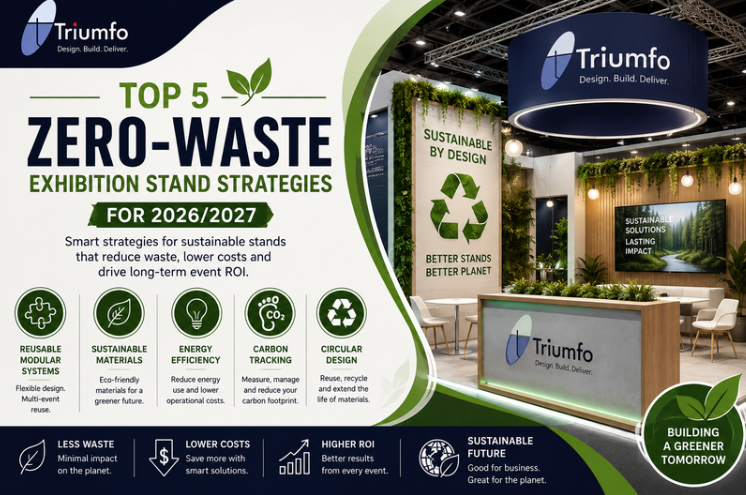
In this article, we will learn about how businesses are designing a zero-waste exhibition stand using modular systems and eco-friendly materials. We’ll also explore ways to eliminate setup waste, lower costs, and boost your long-term event ROI.
Circular exhibition design stands are gaining popularity as most companies now need to meet strict ESG commitments, all thanks to the growing EU sustainability rules. Meanwhile, waste disposal fees are gradually touching the sky. Developing your booth with reusable, circular materials cuts out throwaway waste and aligns with venue green goals.
When you reuse stand parts across multiple shows, it lowers your rental expenses and delivers real long-term cost savings over time.
Modular booth systems are the easiest way to plan a sustainable trade show. Instead of building wood walls that get thrown away after three days, you can use these flexible frames for years.
Why Modular System Support Circular Exhibition Design
Modular booth designs are made using lightweight aluminium frames like building blocks. You can easily resize the booth to fit different display spaces. The booth gives you the option to swap parts around; therefore, you purchase far fewer raw materials. When you are able to reuse the same equipment, it helps you minimise resource consumption for the setup.
Rental vs. Ownership
Using a reusable modular booth Europe option gives your company a huge green advantage. Renting or owning modular frames cuts manufacturing waste, saves storage space in warehouses and lightens truckloads to lower gas pollution.
|
Feature |
Traditional Custom Booth |
Reusable Modular Booth |
|
Usage |
Single-event focus |
Multi-event reuse |
|
Waste |
Higher material waste |
Lower material waste |
|
End of Life |
Greater disposal needs |
Circular lifecycle |
|
Cost |
Higher rebuild costs |
Long-term savings |
The materials you pick for your booth play a big role in your total waste. Swapping heavy, toxic options for green choices eliminates your environmental impact quickly.
Good eco-friendly choices include:
● Always choose recyclable aluminium and FSC-certified wood
● Eco-fabric graphics and PVC-free materials that are made with lighter fabrics and replace heavy plastic signs
● Go for water-based inks and low-VOC finishes for a safe coating so that it keeps air clean and odour-free
● Recyclable flooring and reusable signage enable you to utilise them for multiple occasions.
The best approach at this point is to switch to replaceable fabric graphics. You no longer need to throw away the entire thing when the marketing changes. Moreover, simply print a new lightweight fabric cover. This keeps the exact same aluminium frame, drops your shipping weight and updates your branding without making any waste.
Minimising power usage is a step closer towards green initiatives. Simple energy fixes can lower utility bills on the show floor and make your even reporting look great. Here are some easy ways to save power on your zero-waste exhibition stand.
● Use LED lighting to save up to 80% less energy than old bulbs
● Use motion sensors and timers so that booth lights and screens automatically turn on and off
● Use energy-efficient AV gear to keep TV monitors, tablets and media players from running low on power
● Use smart power strips so that they cut off electricity to idle devices when nobody is using them
If you save electricity, it lowers your daily venue cost and carbon usage; as a result, you can show it in your company’s sustainability reports.
To understand how sustainable your booth is, you need to measure the real impact. Tracking your numbers helps you see where you waste resources and where you can save money. Here are a few things you need to keep a close tab on:
Keep a check on your material sourcing and construction, especially how much raw material goes into your build.
● Track freight transportation that includes the gas used to haul your equipment to the venue.
● Total energy usage, including how much electricity your lights and screens consume.
● Waste generation and recovery that calculates what gets recycled versus what ends up in the trash.
A significant number of businesses are now including their trade show data in their official ESG and sustainability reports. Measuring these details proves you are serious about cutting waste and making smart, eco-friendly choices.
A circular exhibition design strategy is where you keep your booth materials out of trash dumps. Instead of throwing everything away after a single show, better to plan every piece to last for years. Here are some simple circular habits you need to follow,
● The modular stand must easily align and come apart.
● Simply touch up frames and switch out old fabric graphics to change your branding.
● Store your parts safely in local warehouses between events.
● Work with local green supplies to eliminate the challenges that come with long-distance trucking.
A circular approach keeps your equipment working longer and removes expensive rebuilds. It's a powerful way to stop waste from ending up in landfills.
Designing a zero waste exhibition stand means you need more than just green materials. It's the reusable modular frames, circular exhibition design, smart energy use and carbon tracking that help lower environmental impact.